

Best Single Origin Beans for Beginners to Start With
Last Updated: November 17, 2026
Quick Summary
Medium-roast single origin beans from Brazil and Colombia are the best starting point for beginners, because both offer smooth, balanced cups without extreme acidity or bitterness. Brazil Santos is the safest first bag, landing on cocoa and gentle sweetness, while Colombia delivers a balanced everyday cup with dried orange, berry, and chocolate notes.
- Brazil Santos is a medium roast with a pulped natural process and cocoa notes.
- Colombia is a medium roast from smallholder farmers around Medellin.
- A French press comparison recipe uses 30 grams of coffee to 500 grams of water.
- Start with a sample pack instead of a full pound to avoid wasting money.
- Drip machine or French press is the most forgiving method for new brewers.
Table of Contents
- What Single Origin Beans Mean for a First-Time Buyer
- Best Single Origin Beans for Beginners: Quick Comparison
- Brazil Santos: The Smoothest Entry Point
- Colombia: A Balanced Cup for Daily Drinking
- Single-Origin Coffee Flavor Profiles and Tasting Notes
- Single-Origin Coffee vs. Blends: Which Should a Beginner Buy?
- Single-Origin Coffee Brewing Methods for New Brewers
- How to Brew Single-Origin Coffee Without Wasting a Bag
- Build Your First Single-Origin Order at Blodgett Coffee
- Frequently Asked Questions
What Single Origin Beans Mean for a First-Time Buyer
Single origin beans are coffee beans from one specific growing region, farm, or cooperative, rather than a blend of beans from multiple countries. That traceability is the whole point: a single origin lets you taste what one place, one climate, and one processing method actually produce in the cup.
That matters more than most beginners expect. A blend is engineered to taste consistent every time; a single origin is allowed to taste like itself.
Here's the catch most guides skip: single origin doesn't automatically mean better. It means specific. Some origins suit certain brew methods and roast levels far better than others, and picking blind is how first-time buyers end up with a bag they can't finish. Below, we'll walk through which origins work best for new drinkers, how to brew them without wasting money, and where blends still win.
Best Single Origin Beans for Beginners: Quick Comparison
Medium-roast coffees from Brazil and Colombia are a common starting point for new single origin drinkers, because both offer smooth, balanced cups without extreme acidity or bitterness.
| Coffee | Roast Level | Tasting Notes | Best Brew Method | Price |
|---|---|---|---|---|
| Brazil Santos | Medium | Cocoa, smooth, elegant | Drip, French press, espresso | $22.99 |
| Colombia | Medium | Dried orange, berry, chocolate | Pour-over, drip | $22.99 |
| Mexico | Medium | Chocolate, cinnamon, green apple | Drip, French press | $22.99 |
| Peru | Medium | Salted caramel, citrus | Pour-over, drip | $22.99 |
| Costa Rica | Medium | Sweet apple, raisin, honey | Pour-over, drip | $22.99 |
| Ethiopia Natural | Medium-light | Milk chocolate, fruity, caramel | Pour-over | $22.99 |
If you want to try several before committing to a full bag, the single origin favorites sample pack gives you six 2-ounce portions to compare side by side.
Brazil Santos: The Smoothest Entry Point
Brazil Santos is the safest first bag a new single-origin drinker can buy. It's a medium roast with a pulped natural process, and the cup lands on cocoa and gentle sweetness rather than sharp acidity. Nothing about it is challenging, which is exactly why it works as a starting point.
The beans come from Fazenda Santa Barbara in the Parana and Sao Paulo growing regions, grown at 750 to 1,050 meters on volcanic loam. Lower altitude generally means softer acidity, and you taste that here. It's forgiving across brew methods too: drip, French press, and espresso all produce a drinkable cup even if your technique is still rough.
Best for: anyone who drinks coffee with milk or sugar and wants to ease into black coffee. Skip if: you already know you love bright, fruity, tea-like coffees.
When you're ready to commit to a full bag, you can buy Brazil Santos directly.
Colombia: A Balanced Cup for Daily Drinking
Colombia is a good choice for anyone who wants one coffee they can drink every single morning without getting bored. This medium roast from smallholder farmers around Medellin carries dried orange, berry, and chocolate notes, and the fully washed process keeps the cup clean and predictable.
That balance is the appeal. It has enough brightness to stay interesting and enough body to feel like coffee rather than tea. Colombian beans also handle a range of brew methods well, so you're not locked into one setup to get a good result.
The honest limitation: because it sits in the middle of the flavor spectrum, it won't wow anyone chasing extremes. If you want a coffee that makes you stop and think, this isn't it. If you want a coffee that's simply good every day, it is.
Ready to make it your house coffee? Order Colombia and see how it fits your routine.
Single-Origin Coffee Flavor Profiles and Tasting Notes
Single-origin coffee flavor profiles are shaped by four things: origin, altitude, processing method, and roast level. Understanding those four variables is how you predict what a bag will taste like before you open it.
- Washed process: clean, bright, and clear. Flavors read as distinct rather than muddled.
- Natural process: fruitier and heavier, because the bean dries inside the cherry.
- Pulped natural: the middle ground. Sweet, smooth, low acidity. Brazil Santos is a good example.
- Higher altitude: denser beans, more acidity, more complexity. Above roughly 1,200 meters, expect more perceived brightness than a lower-grown bean of the same variety.
- Darker roast: mutes origin character and pushes toward chocolate and smoke. A medium roast is the widest on-ramp for a new drinker; dark roasts flatten the differences between origins, which defeats the point of buying single origin.
Beginners often assume "flavor notes" are added flavorings. They aren't. Tasting notes describe what the coffee naturally tastes like, and they're a guide, not a guarantee. You may not taste green apple in a Mexican coffee, but you'll likely notice it's rounder and softer than an Ethiopian.
A Repeatable Tasting Comparison You Can Run at Home
Most guides tell you to "taste side by side" and stop there. Here is the actual method, so your comparison means something instead of turning into a vague memory of "that one was smoother."
Hold everything constant except the bean. Use the same brew method, the same dose, the same water, the same grind setting, and the same cup for every coffee.
A workable starting recipe for a French press comparison:
- Dose: 30 grams of whole bean coffee (about 1 ounce)
- Water: 500 grams (about 17 fluid ounces) just off the boil, roughly 200°F to 205°F
- Grind: coarse, like sea salt
- Steep: 4 minutes, then press slowly and pour immediately
That yields two 8-ounce cups, so you can taste each coffee twice. Brew one origin, taste it, then brew the next with the identical recipe. Rinse the press between coffees so you don't carry flavor forward.
Score each cup on four axes, not one. Rate aroma, acidity (low to high), body (thin to syrupy), and finish (short to long) on a simple 1-to-5 scale. This is the same structure professional cuppers use in simplified form, and it forces you to separate "I liked it" from "it was bright", two different judgments that beginners often blur.
Taste at two temperatures. The cup changes as it cools. A coffee that tastes flat at 160°F often opens up at 140°F. If you only taste the first sip, you're grading the hottest, least expressive version of the bean.
Write one sentence per coffee. "Brazil Santos: low acidity, heavy body, cocoa finish, easy to drink black." That sentence is worth more than a star rating, because it tells you what to look for next time.
A common pattern among new tasters: the coffee you liked least on day one is often the one you reach for by week three.
Matching a Flavor Profile to What You Already Drink
If you drink coffee with milk and sugar, start with a low-acid, chocolate-forward origin like Brazil or Mexico. If you drink black coffee and enjoy tea, lean toward a washed Colombian or a medium-light Ethiopian. If you already like espresso, a medium-roast Brazilian or Colombian pulls a sweeter, more forgiving shot than a light roast, which is harder to extract evenly without a capable grinder.
The point of tasting notes is not to chase a flavor you read on a bag. It's to build a vocabulary so you can describe what you actually want and buy it again.
Single-Origin Coffee vs. Blends: Which Should a Beginner Buy?
Single-origin coffee offers traceability and a distinct flavor you can learn from. Blends offer consistency and balance, because a roaster can adjust the recipe as crops change. Neither is superior; they solve different problems.
Here's where most advice gets it backwards. People tell beginners to start with blends because they're "safer." In practice, blends hide what coffee can taste like. A beginner drinking a blend learns that coffee tastes like coffee. A beginner drinking a single origin learns that coffee tastes like something.
Our recommendation: start with single origin to build your palate, then add a blend for your daily driver once you know what you're chasing. If you want both in one order, the best sellers sample pack mixes blends and single origins so you can compare directly.
Single-Origin Coffee Brewing Methods for New Brewers
The best brewing method for a beginner is a drip machine or French press, because both forgive small mistakes in grind size and timing. Pour-over gives you more control, but it also gives you more ways to ruin a cup.
- French press: coarse grind, four minutes steep, no paper filter. Full body, forgiving.
- Drip machine: medium grind, set it and forget it. Best for busy mornings.
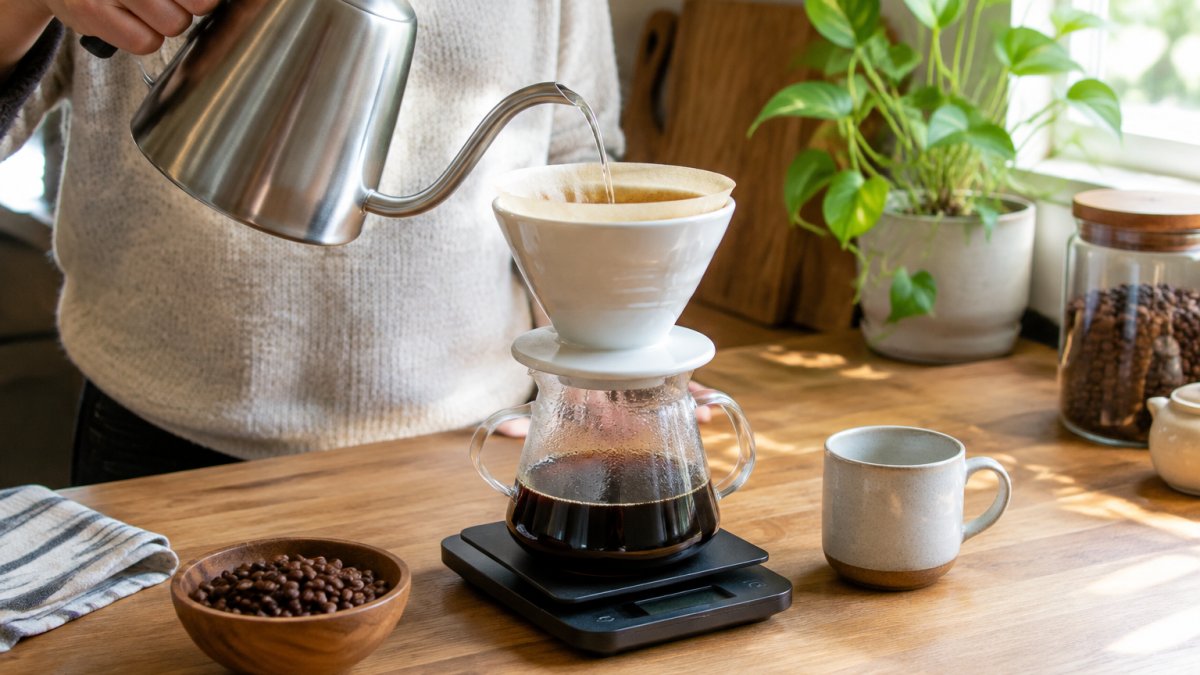
- Pour-over: medium-fine grind, gooseneck kettle, steady pour. Highest ceiling, steepest learning curve.
- Espresso: fine grind, requires a capable machine. Skip until you know your taste.
Two variables matter most: grind size and water temperature. Too fine a grind chokes the brew and turns it bitter. Water just off the boil, rather than boiling, keeps the cup sweeter. For a fuller explanation of grind and ratio, the fresh coffee delivery guide covers buying and storage in more depth.
Start Without Specialty Equipment
You do not need a scale, a gooseneck kettle, or a burr grinder to brew a good single origin. You need a consistent starting point and one change at a time.
Automatic drip machine. Use the machine's own scoop and water reservoir markings, but level the coffee with a straight edge instead of heaping it. A medium grind from the grocery store works; if the machine has a "bold" setting, use it for a medium roast and leave it off for a light roast.
French press without a scale. Two level tablespoons of coarse-ground coffee per 8 ounces of water is a reasonable starting ratio. Pour water just off the boil, stir once, steep four minutes, press slowly. If the cup tastes weak, add a half tablespoon next time; if it tastes harsh, coarsen the grind or shorten the steep by 30 seconds.
No grinder at all. Buy pre-ground and store it in the sealed bag, folded and clipped, in a dark cabinet. Pre-ground coffee stales faster than whole bean, so buy smaller bags and finish them within a few weeks.
Troubleshooting a Cup You Don't Like
Flavor preference is only half the decision. The other half is technique, and most disappointing first cups are fixable without throwing out the bag. Change one variable at a time and taste again.
- Sour, sharp, or tea-like: usually under-extracted. Grind finer, raise water temperature toward 205°F, or extend the brew time. A very light roast needs more of all three.
- Bitter, dry, or ashy: usually over-extracted. Grind coarser, lower the water temperature, or shorten the steep. Dark roasts over-extract faster than medium roasts at the same setting.
- Weak or watery: increase the dose before you change the grind. A common beginner error is adding more water instead of more coffee.
- Harsh or muddy: often too fine a grind for a French press, or too much agitation. Coarsen the grind and stir once, not repeatedly.
- Inconsistent from cup to cup: your dose or grind is drifting. Level the scoop and weigh the beans if you have a scale; if you don't, count scoops out loud so you repeat the same number.
Watch out: changing grind, dose, and temperature all at once makes a bad cup impossible to diagnose. Pick one variable, adjust it, and brew again.
A useful rule of thumb: if the cup is close but not quite right, adjust grind first, dose second, and temperature last. Grind has the largest effect on extraction, and it's the easiest variable to change between brews.
How to Brew Single-Origin Coffee Without Wasting a Bag
Wasting a bag usually comes down to three things: stale beans, bad storage, and brewing a coffee with a method that fights its flavor profile. Fix all three and almost nothing goes to waste.
Watch out: buying a full pound of an origin you've never tasted is the single most common way beginners waste money. Start with a sample pack or a smaller bag.
Freshness is the biggest lever. Check the roast date on the bag, not the best-by date. Coffee is at its best in the weeks after roasting, and grocery store bags often sit for months.
Storage matters too. Keep beans whole in an airtight container, away from light and heat, and grind right before brewing. Don't refrigerate.
Finally, match the brew to the bean. A light, fruity Ethiopian in a French press can taste muddy; the same coffee in a pour-over tastes clean.
Build Your First Single-Origin Order at Blodgett Coffee
The hardest part of starting with single origin coffee isn't brewing. It's choosing the first bag without wasting money on something you don't like. Our answer is simple: start with a sample pack, taste six coffees brewed the same way, and let your own palate make the decision.
Blodgett Coffee roasts every batch to order, so the bag that arrives is fresh. Our single origin listings include tasting notes and origin details, so you know what you're buying before it ships. Ordering is straightforward.
Your first single-origin bag doesn't need to be a gamble. Start with a sample pack, brew two origins side by side, and let your own taste settle the argument. Blodgett Coffee roasts to order, ships fast, and labels every bag with the origin and tasting notes you need to choose with confidence. Get started with Blodgett Coffee and find the coffee you'll actually finish.
Frequently Asked Questions
What are the best single origin coffee beans for beginners?
Start with medium-roast Brazilian or Colombian single origin beans. Brazil Santos delivers a smooth cup with cocoa notes and low bitterness, which suits most new drinkers. Colombia brings dried orange, berry, and chocolate notes with enough sweetness to stay approachable. Both work in a drip machine, French press, or pour-over without special equipment. A sample pack lets you try several origins side by side before committing to a full bag.
Are single origin coffees better than blends?
Neither is objectively better. Single origin beans show one region's character, so you taste the difference between a Brazilian and an Ethiopian coffee. Blends combine origins for consistency and balance, which is why many espresso recipes rely on them. For learning what you like, single origin beans teach you faster because each bag is a distinct flavor. Once you know your preference, blends become a reliable everyday option.
Which single origin coffees have the smoothest, least acidic flavor?
Brazil Santos and Mexico are the gentlest starting points. Brazil Santos is pulped natural and medium roasted, giving cocoa and a rounded body with minimal brightness. Mexico brings chocolate, cinnamon, and green apple at a medium roast. Peru, with salted caramel and citrus, sits slightly brighter. If acidity bothers you, choose medium or medium-dark roasts and brew with water just off the boil rather than at a full rolling boil.
How should you store coffee beans to keep them fresh?
Keep whole beans in an airtight container away from light, heat, and moisture, and grind right before brewing. Buy amounts you will finish in two to four weeks, since roasted coffee fades after that window. Check the roast date rather than a best-by date. A 2-ounce sample pack is a low-risk way to test an origin, and a 12-ounce bag suits one or two cups a day.
Can beginners use single origin coffee beans for espresso?
Yes, though single origin beans behave differently from blends in an espresso machine. Medium roasts like Brazil Santos and Colombia pull sweeter, more forgiving shots, while light roasts need finer grinding and more precision. Start with a medium roast, keep a 1:2 ratio of coffee to espresso by weight, and adjust grind before changing anything else. A sample pack lets you test several origins without buying full bags.
